Fall Cross Stitch and Needlepoint Patterns: What to Stitch This Autumn
September 19, 2026
Autumn is when the stitching actually gets done. Summer breaks the rhythm: trips, irregular evenings, the general pull of being outside. Fall brings routine back, and with it those longer uninterrupted sessions that a real project needs. If you've had something half-started since spring, this is probably when it gets finished.
This guide covers the autumn cross stitch and needlepoint patterns worth starting now: the motifs that stitch as well as they look, realistic project sizes for a September through November window, the DMC thread shades that read unmistakably as fall, and how to turn your own autumn photos into counted patterns.
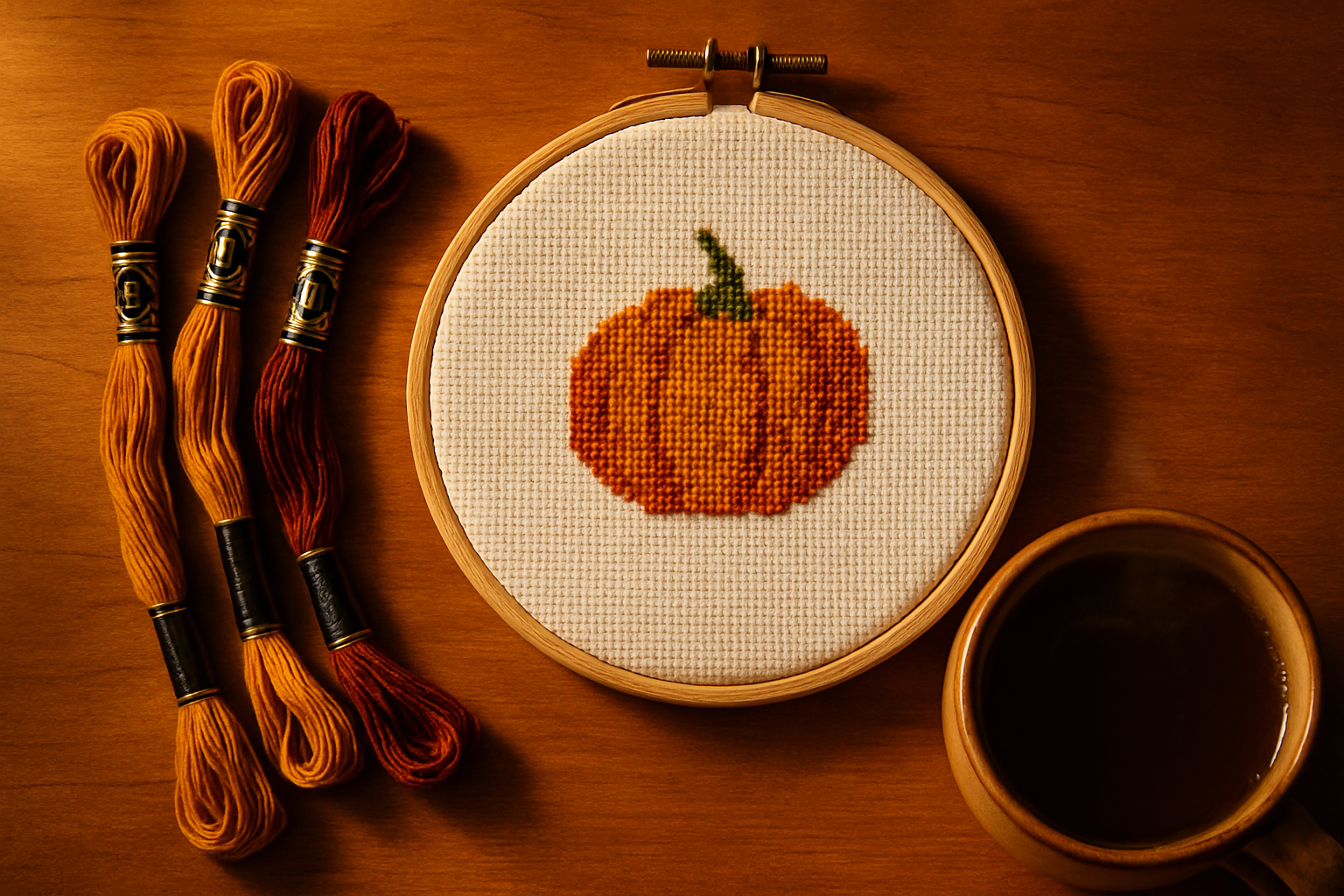
Why Autumn Gets Stitching Done
It's not just the cozy atmosphere, though that helps. Summer scatters people: travel, late evenings, irregular schedules. When September starts, the calendar settles back into a routine. Kids go back to school, evenings open up, and suddenly there are two quiet hours in a row where there weren't before. Those are exactly the sessions a larger project needs.
There's also the useful pressure of autumn deadlines. A project started in September has a real target: Thanksgiving, the first frost, Christmas. That's different from the open-ended summer project that kept getting pushed to next week. The deadline is far enough away to feel comfortable but close enough to actually start.
And fall offers something genuinely useful for photo-based projects: the subjects. Your pumpkins, your dog in the leaves, the tree at the end of the street that turns the same color every October. These are better source material than anything from a pattern catalogue, and they convert to counted cross stitch just as readily.
The Fall Motifs That Actually Hold Up in Cross Stitch and Needlepoint
Not every autumn motif stitches as well as it looks on Pinterest. Here's what actually works:
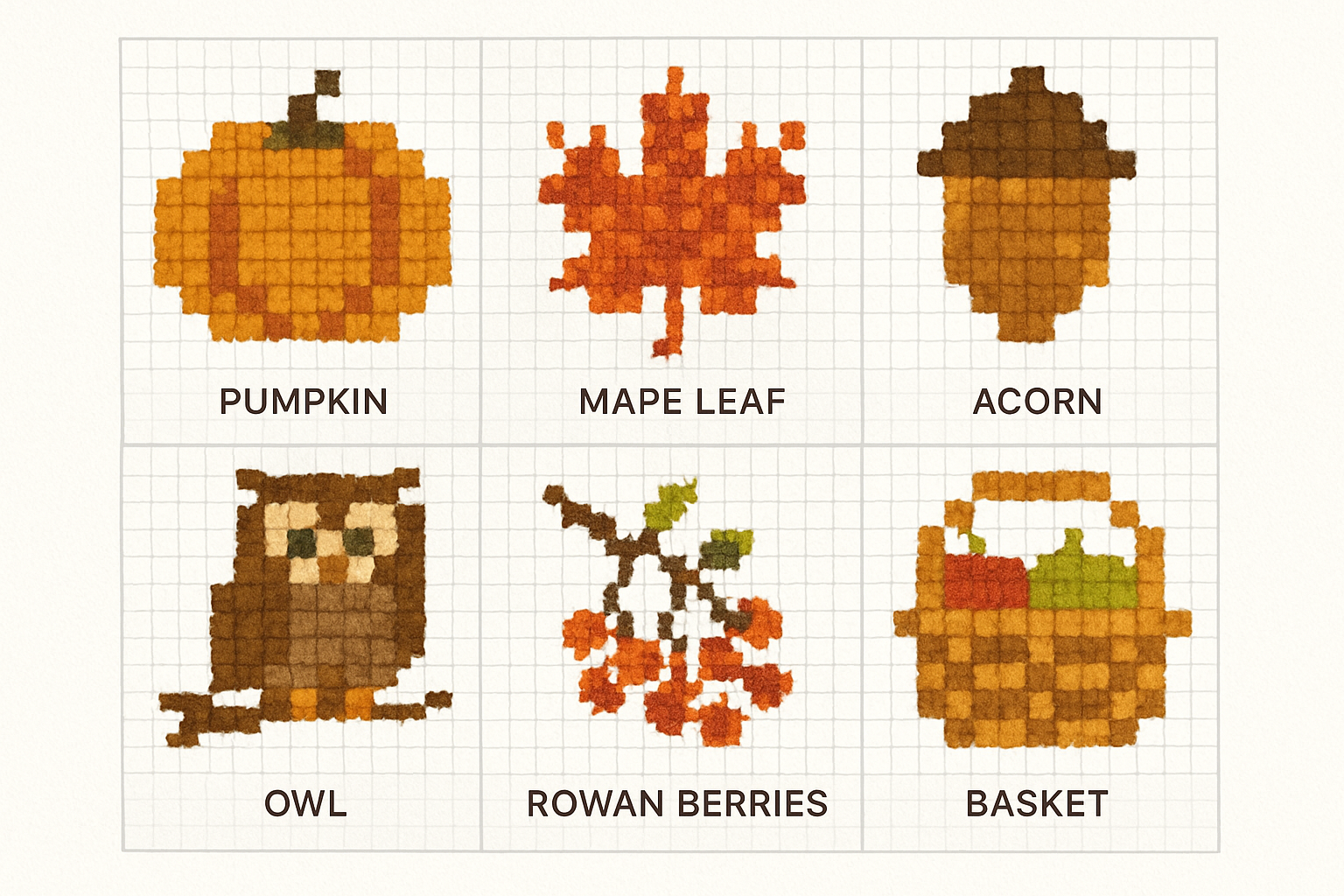
Pumpkins are the reliable standby for good reason. The shape is graphic enough to read immediately at 50 stitches wide, and the color gradient from pale cream through deep burnt orange plays well in both DMC cotton and tapestry wool. A single pumpkin at 80×80 stitches on 14-count finishes in a weekend, useful if you want something for the mantel without committing to a month-long project. For needlepoint, pumpkin cushions are a classic: the fully covered canvas gives the piece a solid, sculptural quality that a framed cross stitch piece doesn't.
Autumn leaves are probably the most versatile motif in the fall vocabulary. A single maple leaf works as a quick ornament. A row of mixed leaves makes a border. Scattered across a background, leaves add depth without competing with the main subject. They also happen to be one of the subjects where a photo conversion beats a flat graphic design. Real leaf variation, with its different reds and golds and the way light hits the veins, produces something genuinely richer than a flat illustration.
Acorns and berries are the small wins: a single acorn is around 20 stitches wide and stitches in an afternoon. A sprig of rowan berries fills nicely as a sidebar motif and introduces a pop of terracotta red into an otherwise brown-and-orange palette.
Owls and crows have anchored the cozy autumn aesthetic in cross stitch for years. An owl on a bare branch against an October sky works particularly well on evenweave where the pale fabric reads as sky between stitches, so you're not stitching the background at all, which saves several hours on a medium piece.
Harvest scenes and still lifes (a basket of apples, a pumpkin patch, a vase of sunflowers) suit larger canvases and give a photo converter something rich to work with. A real photo of a scene you've set up or photographed in your garden produces associations that no stock design can match.
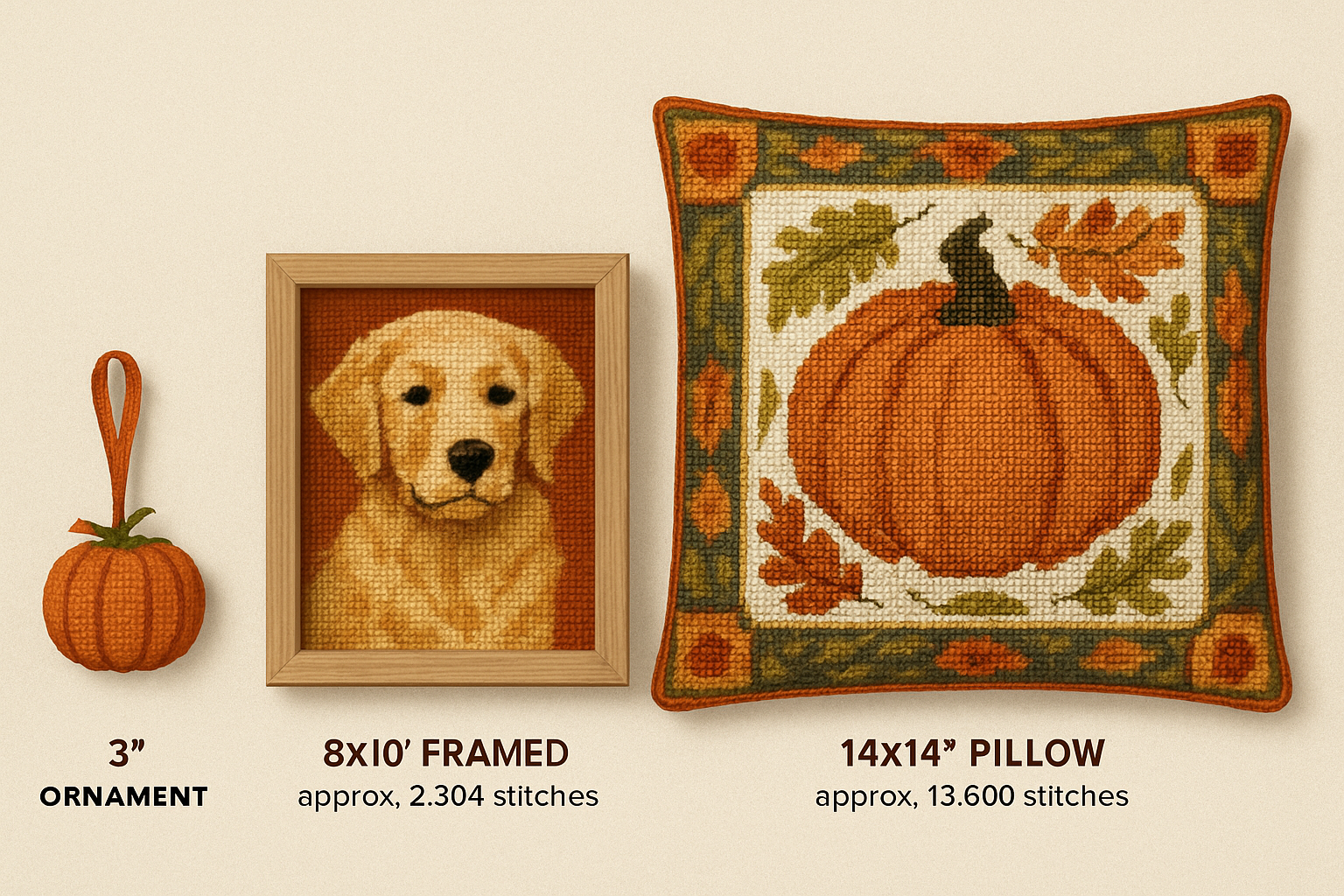
Choosing a Project Size That Actually Finishes This Season
The honest question to ask in September is: what can I realistically complete before the season ends?
Here are practical estimates at an average stitching pace on 14-count Aida. Needlepoint on 14-mesh mono canvas is roughly similar:
| Project type | Approx. stitch count | Estimated hours | Realistic window |
|---|---|---|---|
| Ornament / small motif | ~2,500 (50×50) | 5–8 hours | This weekend |
| Small framed piece | ~10,000 (100×100) | 25–35 hours | By Thanksgiving, starting now |
| Medium portrait | ~22,500 (150×150) | 55–75 hours | Late November if you start in September |
| Pillow / cushion | ~30,000+ | 80–100+ hours | Christmas if you start in September |
These assume focused sessions, not a stitch here and there between interruptions. If your evenings run to about 30 minutes of actual stitching, double the calendar time. A photo pattern with 25 colors and regular thread changes takes 10–20% longer than a flat graphic design with the same stitch count, because the thread swaps add up.
For needlepoint in tapestry wool on 12-mesh canvas, the pace tends to be faster per inch, since wool covers more ground per stitch. A 12-mesh pumpkin pillow at 120×120 stitches finishes noticeably quicker than the same design in DMC on 14-count Aida.
The practical takeaway: ornaments and small framed pieces are zero-pressure autumn projects. You can start any time in September, October, or even early November and finish comfortably. Medium portraits need a September start to land by Christmas. Pillows are a season-long commitment, and one of the most satisfying things to have on the sofa by December, but they require those 80-odd hours to actually happen.
The Autumn Thread Palette: Which DMC Colors Actually Read as Fall
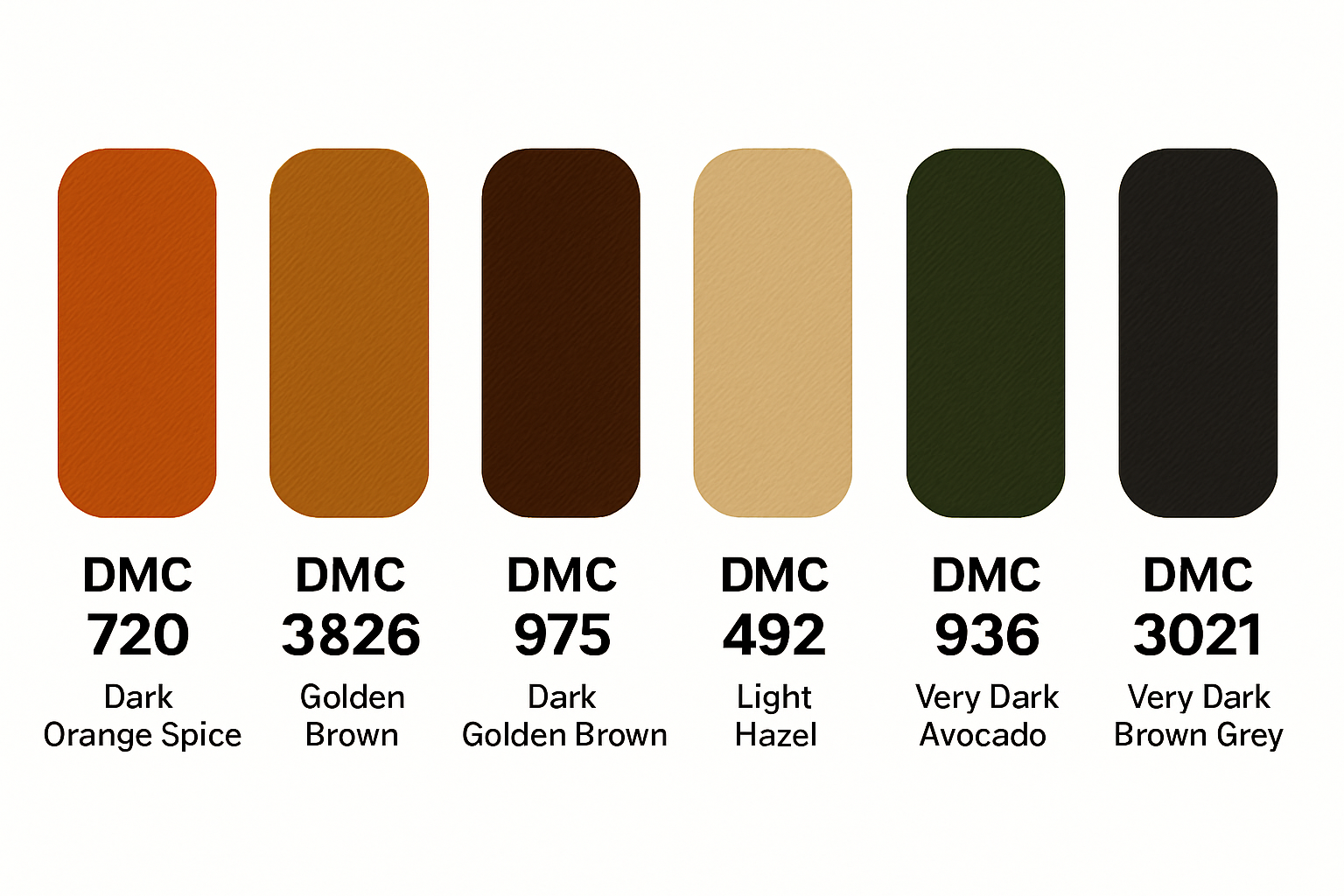
Nearly five hundred DMC shades exist, and most of them don't belong in an autumn palette. These six work as a coherent group. Pick any subset and the piece will feel like fall.
DMC 720 (Dark Orange Spice). The pumpkin shade. Vivid, warm, and the color most people picture when they think of autumn cross stitch. Most fall pieces need it somewhere.
DMC 975 (Dark Golden Brown). Bark, acorn caps, cast shadows on warm orange subjects. This is what keeps the palette from feeling cartoon-bright.
DMC 3826 (Golden Brown). The mid-tone bridge between the orange and the deep browns. Good for fur, dried grass, and the lit side of a pumpkin stem; it sits between the other two without calling attention to itself.
DMC 422 (Light Hazel). Pale wood, cream pumpkin flesh, dry wheat. This shade is what makes a warm palette breathe. Without something this light, autumn palettes tend to go heavy.
DMC 936 (Very Dark Avocado Green). Dark foliage, shadowed leaves, depth in a stem or vine. It's a warm green (it contains yellow), so it sits naturally alongside the oranges and golds without pulling the palette cool.
DMC 3021 (Very Dark Brown Grey). Outlines, bare branches, cast shadows. This is the near-black that gives definition without true black's harshness. DMC 310 reads as cold and modern in a fall piece; 3021 reads as autumn.
For tapestry wool (needlepoint), the DMC Colbert range maps closely: Colbert 7918 for the pumpkin orange, 7479 for golden brown, and 7372 for avocado green are reliable starting points.
If you're generating a pattern from a real autumn photo, the converter handles the DMC matching automatically, and the result will usually be richer and more accurate than any preset palette, because real leaves contain subtle variation that a six-color list can't anticipate.
Your Own Fall Photos Make the Best Autumn Patterns
Purchased patterns are fine, but the autumn pieces that get kept for years are almost always from a real photo. Your dog in the leaves. The pumpkin you actually grew. The view out the kitchen window on a grey October morning. The tree at the end of the garden that turns the same color every November. These carry something a generic autumn motif doesn't, and they convert to counted cross stitch just as readily.
The conversion process for a fall photo follows the same steps as any photo-to-pattern workflow: upload, crop to frame your subject, choose your color count, and generate a preview. A few choices make a real difference for autumn subjects specifically:
Contrast matters more than color. Autumn light is often flat and overcast. A photo that looks beautiful on your phone may convert to a muddy, flat chart. Before uploading, add contrast, even a +20 adjustment in any photo editor will sharpen the boundary between leaves and sky, or subject and background. That extra crispness is what a converter needs to produce clean color regions rather than blended noise.
Color count for fall subjects. Rich autumn foliage rewards more colors, not fewer. A pumpkin or flat graphic motif works well at 15–20 colors. A detailed scene with fall leaves, or a pet portrait in autumn light with fur texture, typically benefits from 25–35 colors. More than that on a small canvas produces confetti: isolated single stitches of near-identical shades that are tedious to stitch and invisible at viewing distance.
Remove cluttered backgrounds. A dog in front of a busy autumn garden will spend half your color budget on background foliage that nobody looks at. A transparent-background PNG (easily produced by most phone photo apps now) puts every color in your palette to work on the subject itself.
See how your own autumn photo converts. The preview is free before you pay anything.

Cross Stitch or Needlepoint for Fall?
Both crafts suit autumn subjects well. The choice comes down to what finished object you want.
Cross stitch on Aida works better for framed artwork, samplers, and seasonal phrases. The visible fabric does useful work. Pale Aida reads as sky or light background without stitching a single square of it. The materials are lighter and portable. At close range, the X-grid texture is part of the aesthetic; from a distance it reads like a painting.
Needlepoint on mono canvas is better for pillows, cushions, and objects you want to feel dense and substantial. The fully covered canvas produces a solid, mosaic-like surface that suits pumpkins and harvest scenes especially well. Tapestry wool earns its keep here too: the thicker fiber covers 12-mesh canvas quickly and gives autumn colors a warmth and depth that cotton on Aida doesn't quite match.
For photo-based fall patterns, the choice doesn't affect the pattern itself: the counted grid is identical. Needlepoint or cross stitch is a decision you make when you buy fabric and thread, not when you generate the pattern.
Try it with your own photo
Upload a photo and see your counted cross stitch pattern preview — free, before you pay anything.
Try the free pattern previewA little autumn gift for reading this far
Start your fall pattern free, then use one of these codes at checkout when you unlock the digital canvas.
Codes valid through the end of autumn 2026.